
Detection and inspection
Defects, presence, PPE, objects, and quality checks designed around the line or site you run. We collect from your cameras, label with your standards, and evaluate on the messy frames - not only a public benchmark.
Edge AI & Computer Vision
Agam Intelligence builds computer vision and edge AI for places the cloud is too slow or too disconnected: inspection lines, sites, devices, and monitoring that has to decide now. We design models, hardware constraints, and operations so detection holds up outside a lab video.
Intelligence
Vision that works where the camera actually sits.
A model that scores well on a clean dataset can fail under factory lighting, weather, or a cheap camera. We start from the environment and the decision - pass/fail, alert, count, locate - then choose on-device versus cloud, compression, and the human review path so computer vision is an operational system, not a slide of bounding boxes.
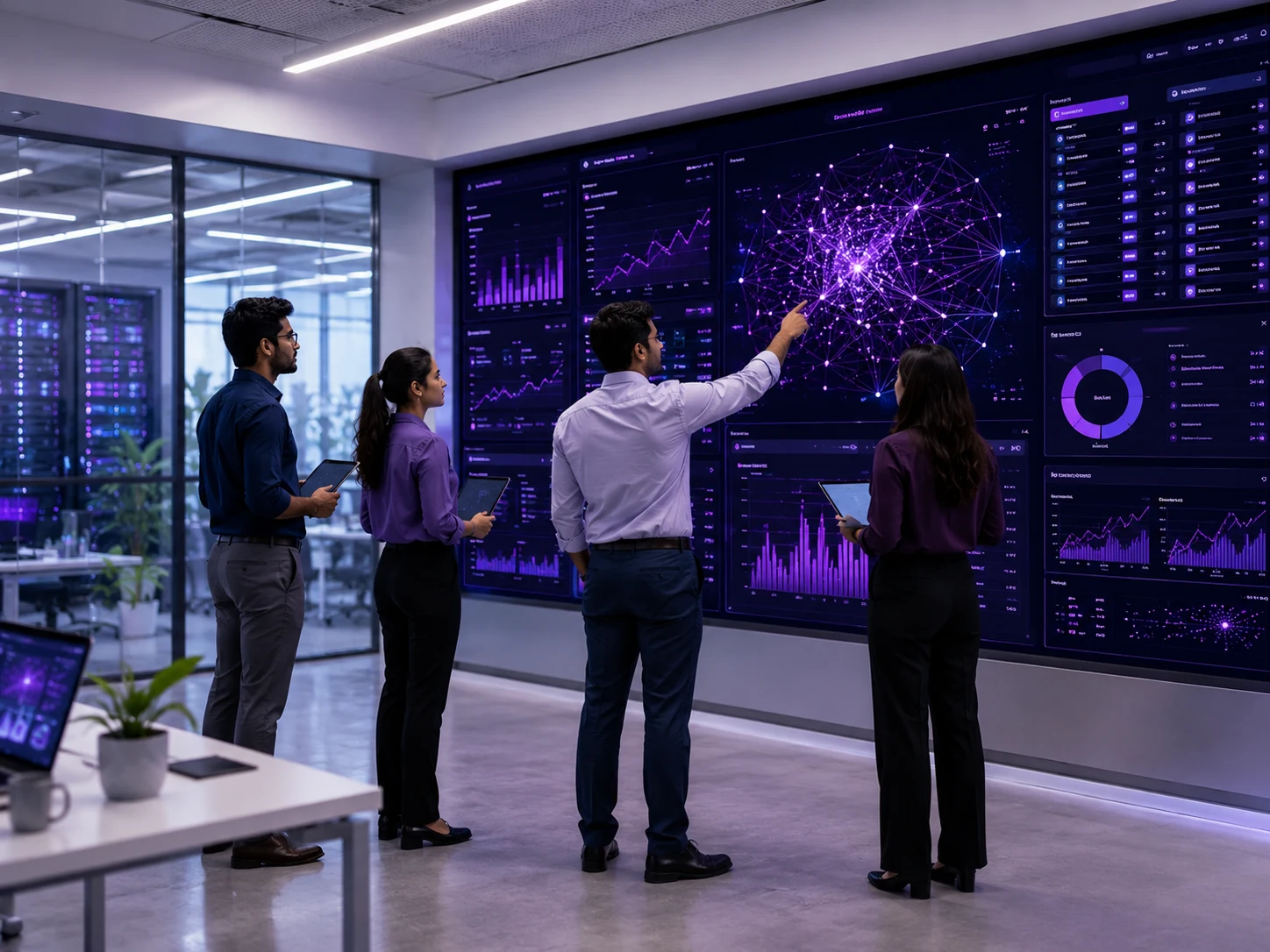
Defects, presence, PPE, objects, and quality checks designed around the line or site you run. We collect from your cameras, label with your standards, and evaluate on the messy frames - not only a public benchmark.

When latency, bandwidth, or connectivity rules out a round-trip to the cloud, we deploy to devices, gateways, and edge boxes. Quantisation, hardware choice, and fallback behaviour are part of the design.

Vision is useful when it pages the right person. We wire detections into alerts, dashboards, and retention policies so operators can act - and so you are not storing unrestricted video you should not keep.

We match model size to the device you can actually install. Distillation, pruning, and TensorFlow Lite or ONNX runtimes are engineering choices against power, heat, and cost - not a research exercise.

Lighting, angles, and rare events decide whether vision works. We design capture, labelling, and retraining loops with the people on site so the dataset stays honest after the first install.

Borderline frames go to a person. We design review queues and feedback into retraining so the system improves, and so a miss does not become an unowned alert storm.

A regional health network needed executive dashboards and predictive models grounded in governed clinical data.

A B2B SaaS vendor needed RAG-based product assistance grounded in customer docs - not a generic chatbot.

A payments processor needed anomaly detection that compliance could defend - not another black-box alert queue.
Vision is measured on inspection yield, false alerts, and time-to-detect in your environment - not mAP on a public dataset.
On-device options, retention policy, and human review reduce cloud dependency and the chance that a camera system becomes a liability.
Pilot on one line or site, prove the lighting and process, then scale hardware and models without a big-bang camera roll-out.
Pressure to ship AI pilots is real, but teams that skip strategy stall on unclear ROI, messy data, and governance gaps. This article explains why use-case clarity, data readiness, and guardrails must come before model selection - and how governance can actually accelerate adoption.
Read the articleFuture-ready data and AI platforms are designed for change from the start - pipelines that can evolve, models that can retrain, and architecture that does not force a rewrite every time the business asks a new question.
Read the articleWhen dashboards disagree, models drift, and nobody owns the pipeline, the problem is often systemic. This article covers the warning signs and what an independent audit should examine across data, process, and platform.
Read more